Hadestown: Teen Edition - April 24 - April 26, 2026
West Carrollton High School
Greek Myths Glossary
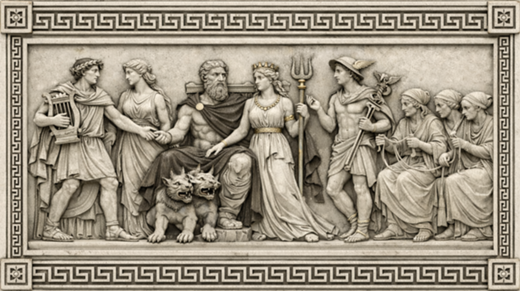
Orpheus was a legendary poet and musician in Greek mythology. His songs were so beautiful that animals, rivers, and even rocks would stop to listen. He fell deeply in love with Eurydice, but after she died suddenly, he traveled to the underworld to bring her back. His music softened the hearts of Hades and Persephone, who agreed to let her return—if he did not look back at her until they reached the surface. Tragically, he glanced back too soon, and she vanished forever.
Eurydice was a gentle nymph and the beloved wife of Orpheus. On their wedding day, she was bitten by a poisonous snake and died, slipping away into the underworld. Orpheus’s desperate journey to rescue her became one of the most famous love stories in Greek myth. Though he almost succeeded, her second death reminded people how fragile life is.
Hades was the Greek god of the underworld, ruling over the land of the dead. He was not evil but stern, a fair king who made sure all souls found their place. Though feared, he also brought wealth from the earth, such as gems and precious metals.
Persephone was the daughter of Demeter, goddess of the harvest. She was kidnapped by Hades and became queen of the underworld. But because she ate seeds of a pomegranate while there, she could not return to her mother forever. Instead, she lived part of the year with Hades and part with Demeter. This cycle explained the seasons: when Persephone returned to earth, spring and summer came; when she went below, winter began.
Hermes was the quick and clever messenger of the gods. He carried messages with his winged sandals and also guided travelers on their journeys. One of his most important jobs was leading the souls of the dead safely to the underworld, which made him a psychopomp—a soul guide.
The Fates, called the Moirai in Greek, were three mysterious sisters who controlled the thread of every person’s life. Clotho spun the thread, Lachesis measured its length, and Atropos cut it, ending each life at the right time. Even the gods were subject to their power.
The Greek chorus was a group of performers who spoke, sang, and sometimes danced together. Their main purpose was to help the audience understand the story. They explained important events, gave background information, and reacted to what the main characters were doing. The chorus often shared the thoughts and feelings that the audience might have and also connected the action of the play to bigger ideas, such as fate, the gods, and human responsibility. Overall, the Greek chorus acted like a narrator, commentator, and emotional voice for the audience all at once.
Page 6 of 6

