Taken At Midnight - February 20 - March 07, 2026

Morton College
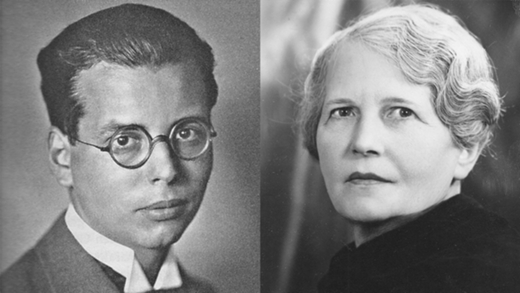
   

On May 8, 1931, lawyer Hans Litten incurred the personal enmity of Adolf Hitler when he summoned the Nazi leader as a witness before the Moabit Criminal Court in the so-called Eden Dance Palace Trial. In November 1930, a group of SA men had attacked the Eden dance hall in Charlottenburg, frequented mainly by left-wing workers. They were armed with bludgeons, clubs, and firearms. Twenty workers were injured, some seriously.


"Lawyer Litten, representing the victims of Nazi terror, wanted to prove that the party itself tolerated, indeed instigated, violence by its members. That's why Hitler, the party leader, was summoned," recalls Litten's colleague, lawyer Rudolf Olden.


“Litten had quite a few quotations from National Socialist literature at his fingertips – ‘to crush the opponents to pulp’, ‘to move from the revolution of words to the revolution of deeds’, and other such phrases – he listened to Hitler with his characteristic persistent calm, angered him a few times, and made him sweat considerably for two hours. Did anyone in the room at the time have any idea that he had pronounced the sentence of a painful death upon himself?”

Nearly two years later, on February 28, 1933, the day after the Reichstag fire, Hans Litten was taken into so-called "protective custody"—on the same day as Egon Erwin Kisch, Ludwig Renn, and Carl von Ossietzky. For him, this marked the beginning of an ordeal through prisons and concentration camps. For Irmgard Litten, who until then had considered herself apolitical, it marked the beginning of a years-long, arduous struggle against the Nazi regime. The struggle of a mother for her son.


Irmgard Litten - Born in Halle/Saale, Germany, on August 30, 1879, into a respected academic family, Irmgard Wüst studied art history and married Fritz Julius Litten, a noted University of Königsberg law professor of Jewish origins who had converted to Lutheranism.


Her son, Hans Achim Litten, became a well-known attorney who specialized in defending controversial Leftists in the often biased courts of Weimar Germany. As a consequence of her family being perceived by Nazis and nationalists as both racially and politically "un-German," even before 1933 Irmgard Litten began to feel the effects of xenophobia and ideological intolerance.


The Nazi seizure of power was a catastrophe for the Littens: Fritz was dismissed from his academic post, and much worse, her son Hans was thrown into Dachau concentration camp as a "Marxist sympathizer." Litten used all the stratagems at her employ to secure her son's release. In the early years of the Nazi regime, world opinion was still deemed important, because the fragile German economy could be threatened by boycotts. As a consequence, Litten hoped for sufficient foreign pressure to effect her son's liberation from Dachau. For several years she worked to free him, using her contacts within Nazi Germany, as well as bringing the case to the attention of the foreign press.


Page 10 of 12